Dedicated to greening
Gozo by:
planting the right tree,
in the right place,
the right way

Siġar (which means ‘trees’ in Maltese) is committed to planting young trees on school grounds and local council lands with plants nurtured from local seeds from the Gozo Plant Nursery and Experimental Farm.

First tree planted : 1st November 2024

133

Trees Planted

7

Education Visits & Clean Ups

16

Planting Events
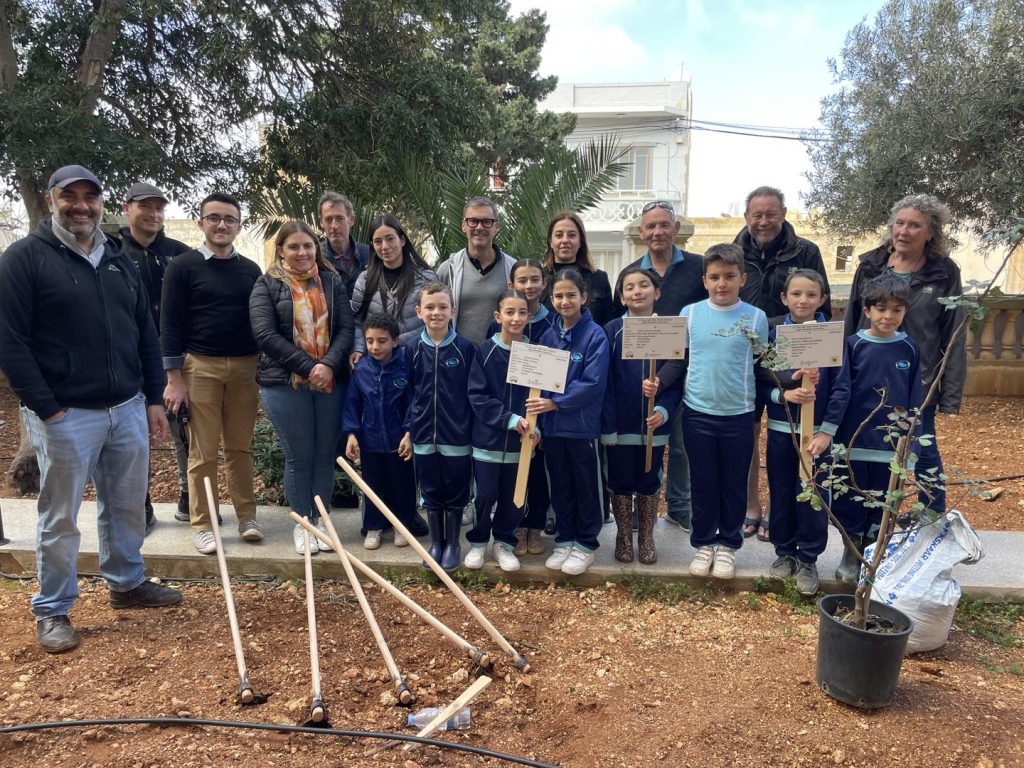
Tree Planting Project at Nadur Primary School – January 2025

Collaborating with Communities for a Greener Gozo

With less than 2% forest cover in Malta, Siġar is committed to enriching Gozo’s landscapes through sustainable tree planting. Our projects will complement other larger afforestation initiatives by focusing on urban areas.

By planting the right tree, in place, in the right way, Siġar will seed and share best practices with its volunteers and members of the public
Latest Social News

Comments Box SVG iconsUsed for the like, share, comment, and reaction icons
Olive trees planted

Olive trees planted in Zebbug doing well thanks to the hard work of our young volunteer !

Well done Jerome. 👍
See MoreSee Less

Trees check at Gozo

Trees check at Gozo College Dun Salv Vella Nadur Primary. Planted with EkoSkola Malta group.
School has fixed and repaired their irrigation system. And the results are there. Trees doing very well.

Good stuff.
See MoreSee Less

Checking on trees planted Nadur school. Irrigation working. All trees doing very well.

Great!
See MoreSee Less

Troops are out on night maneuvers poised to strike. Maurice Stirling See MoreSee Less

Judas trees in Qala watered and doing well.
Simon Wallace

🌳💧🌳💧🌳💧

A bit of fun fact (source wiki). Where does the name come from?

“Etymology and culture
There is a myth that Judas Iscariot hanged himself from a tree of this species, causing its white flowers to turn red.[13] The belief that Judas hanged himself on a Cercis siliquastrum tree likely originated from a translation error. Cercis trees, common in the Middle East, were referred to as 'arbre de Judée' in French, meaning Judea's tree, referring to the hilly regions of that country where the tree used to be common.[14] The story about Judas and the blushing redbud appears to be a result of linguistic evolution and cultural folklore.[15] Another possible source for the vernacular name is the fact that the flowers and seedpods can dangle directly from the trunk in a way reminiscent of Judas's possible method of suicide.[16] The tree also has alternative names such as "love tree" or "redbud".
A sermon illustration on the deadly effects of succumbing to temptation refers to a false idea that the Judas tree killed bees drawn to it: "Dr. Cuyler forcibly illustrates this by reference to the Judas tree. The blossoms appear before the leaves, and they are of a brilliant crimson. The flaming beauty of the flowers attracts innumerable insects; and the wandering bee is drawn after it to gather honey. But every bee which alights upon the blossom, imbibes a fatal opiate, and drops dead from among the crimson flowers to the earth."[17]
Judas trees in Istanbul, Turkey, especially along the Bosphorus, give their distinctive purple color in spring. It is one of the important images of Byzantium and Christianity. The purple of the Judas tree flower resembles the color used in the clothes of Byzantine rulers. It was a sign of wealth and power, as it was the most difficult color to be produced naturally. Except for the emperor, no one could wear the color purple.[18]
Judas trees have been the symbol of Bursa, Turkey, for centuries. "Erguvan (redbud) festivals" began in the 14th century because Emir Sultan, one of the Muslim Anatolian saints, son-in-law of the Ottoman Empire sultan Bayezid I, met with his followers in Bursa every year during the Judas tree's blooming season; they continued as a tradition until the 19th century because of their positive effects on the city's economy. There is a present effort to revive these festivities”.

That’s all folks. Judas tree : tree of Judea.
See MoreSee Less